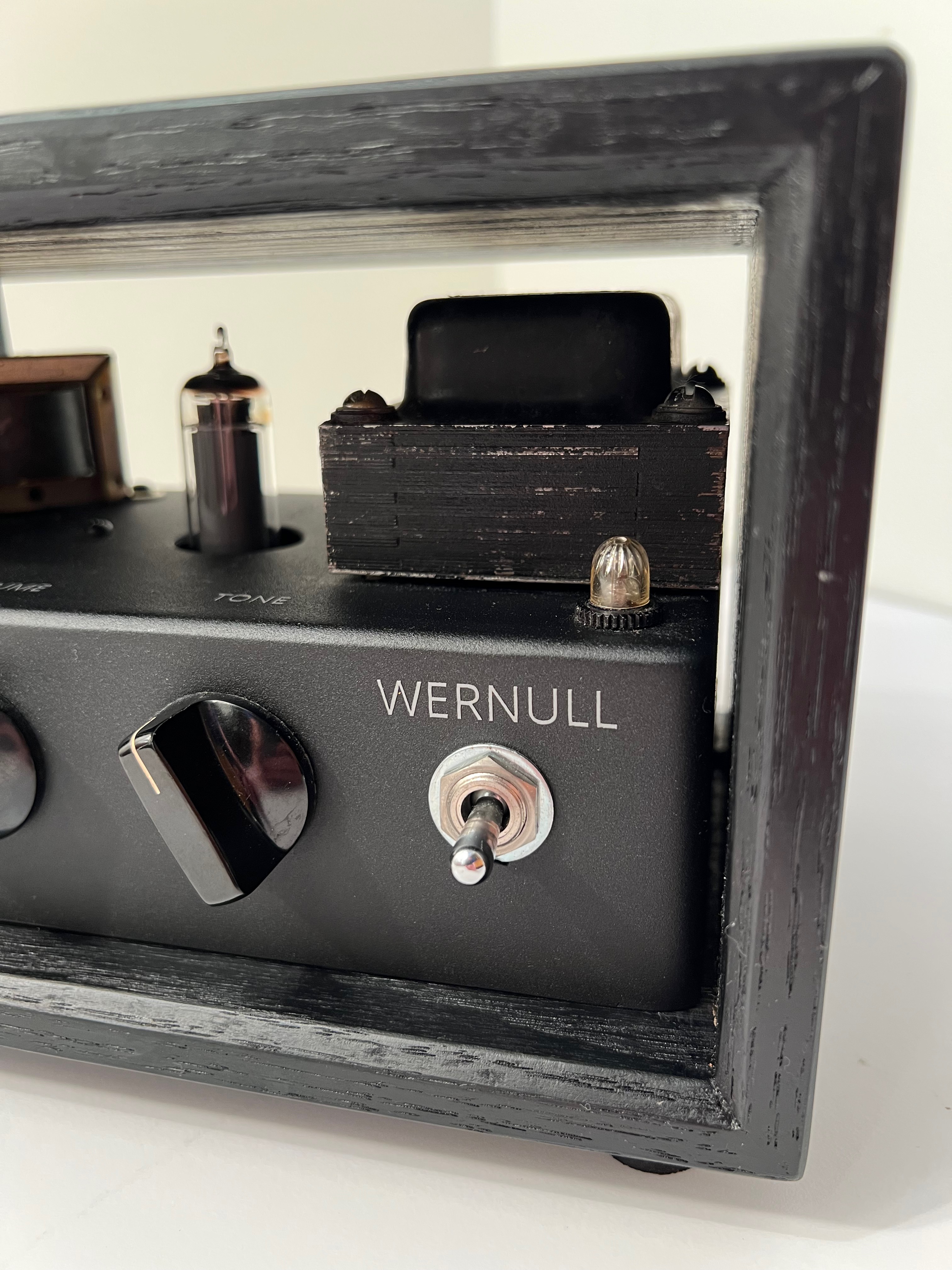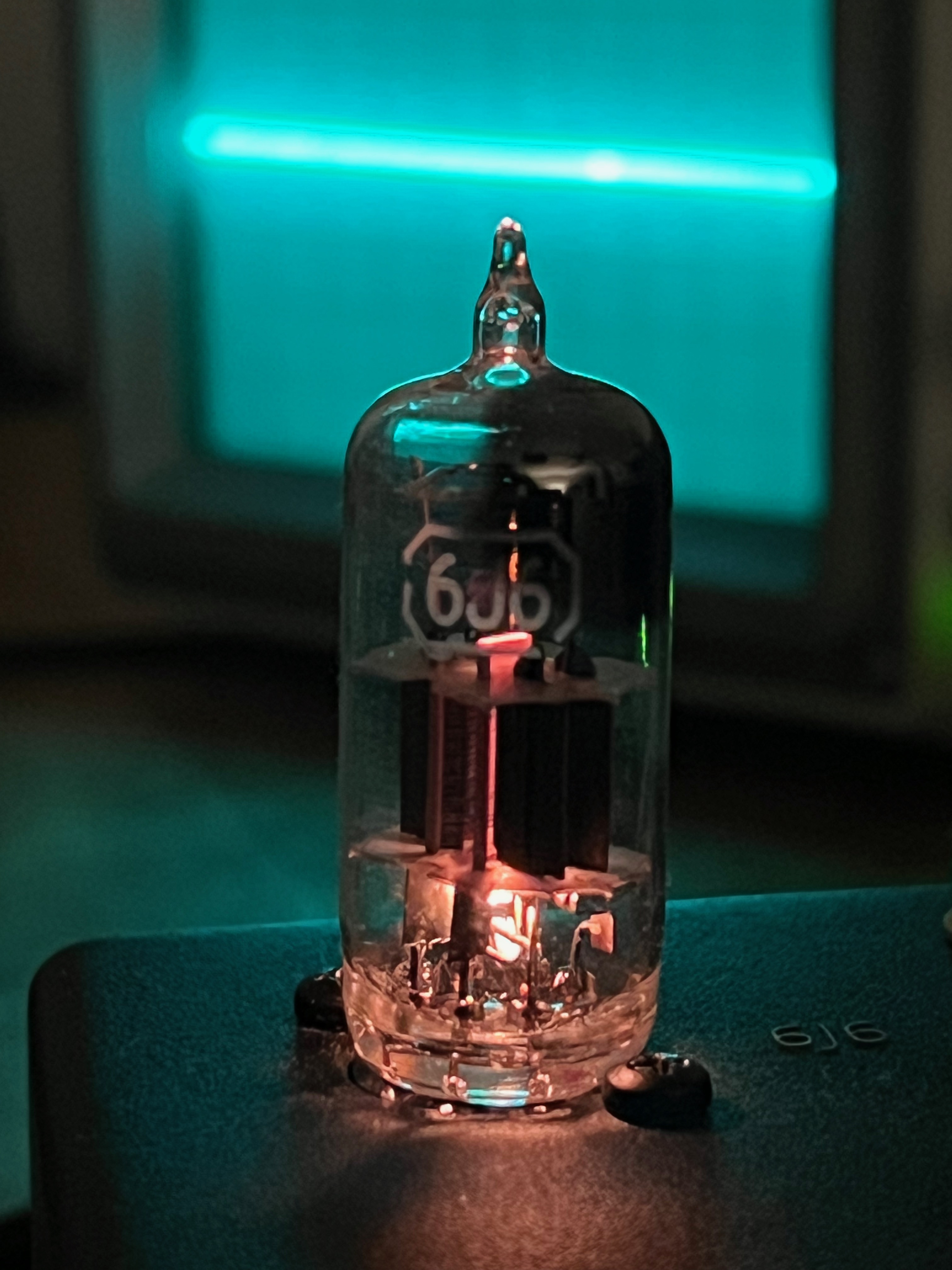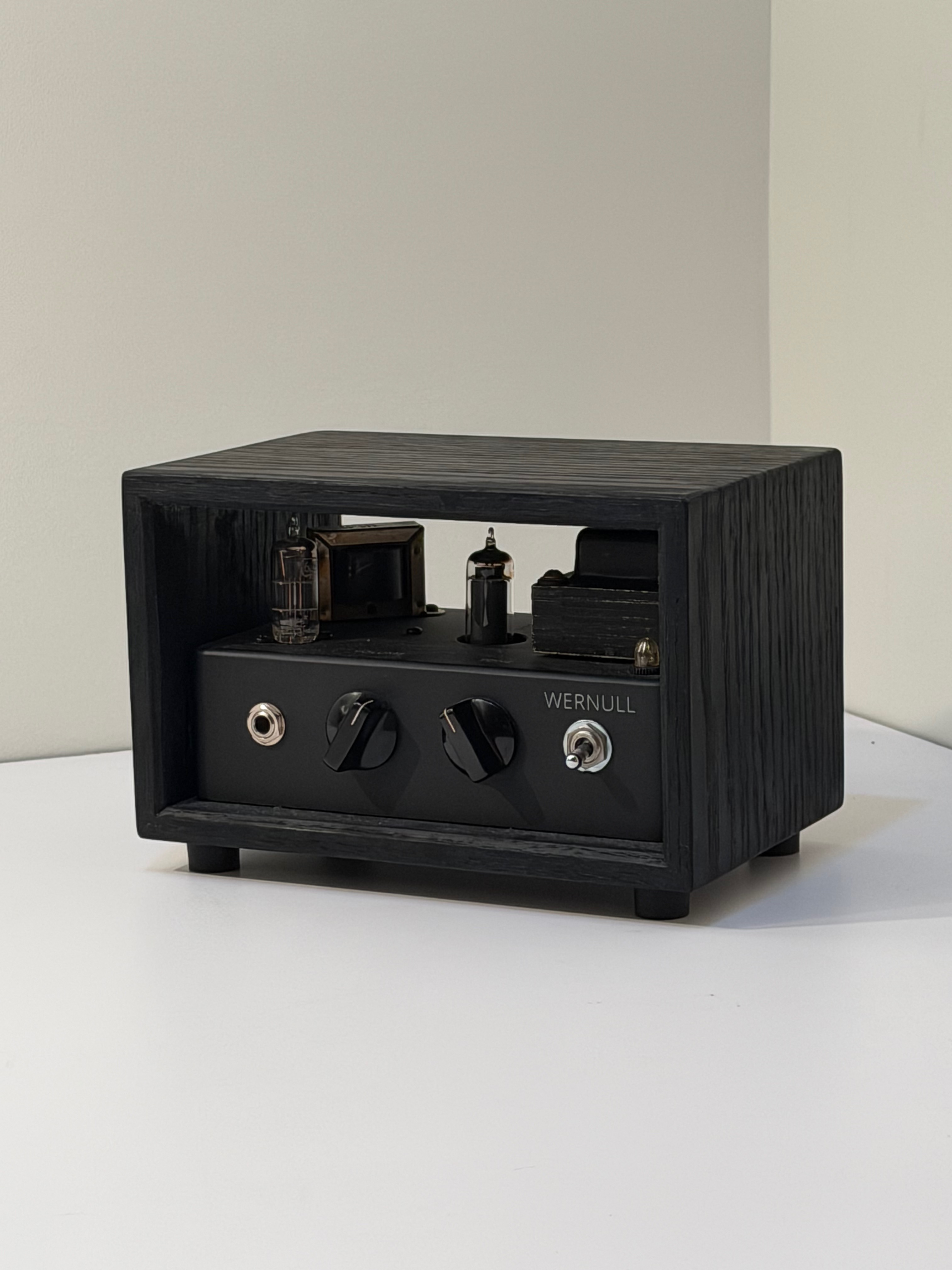
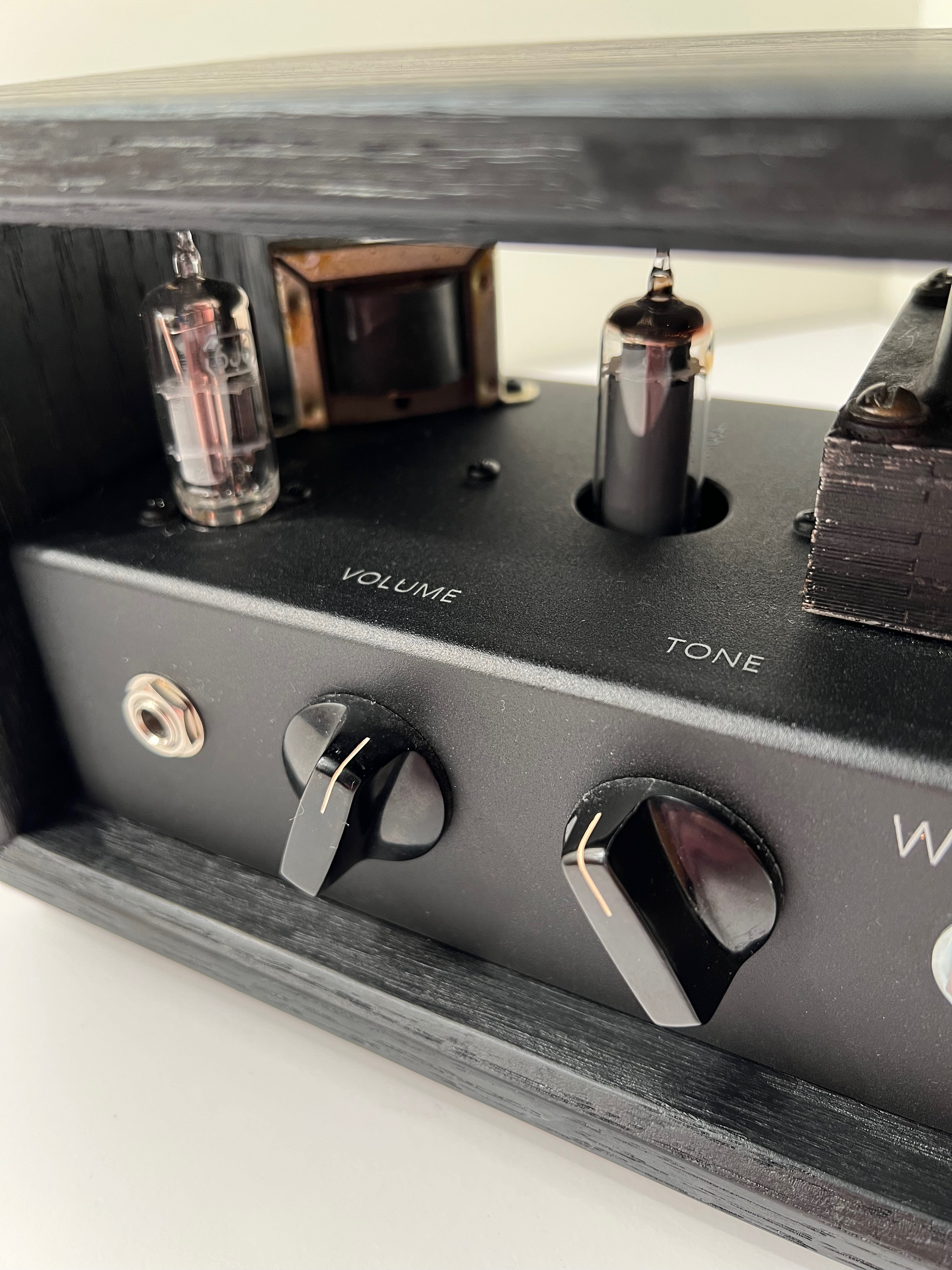
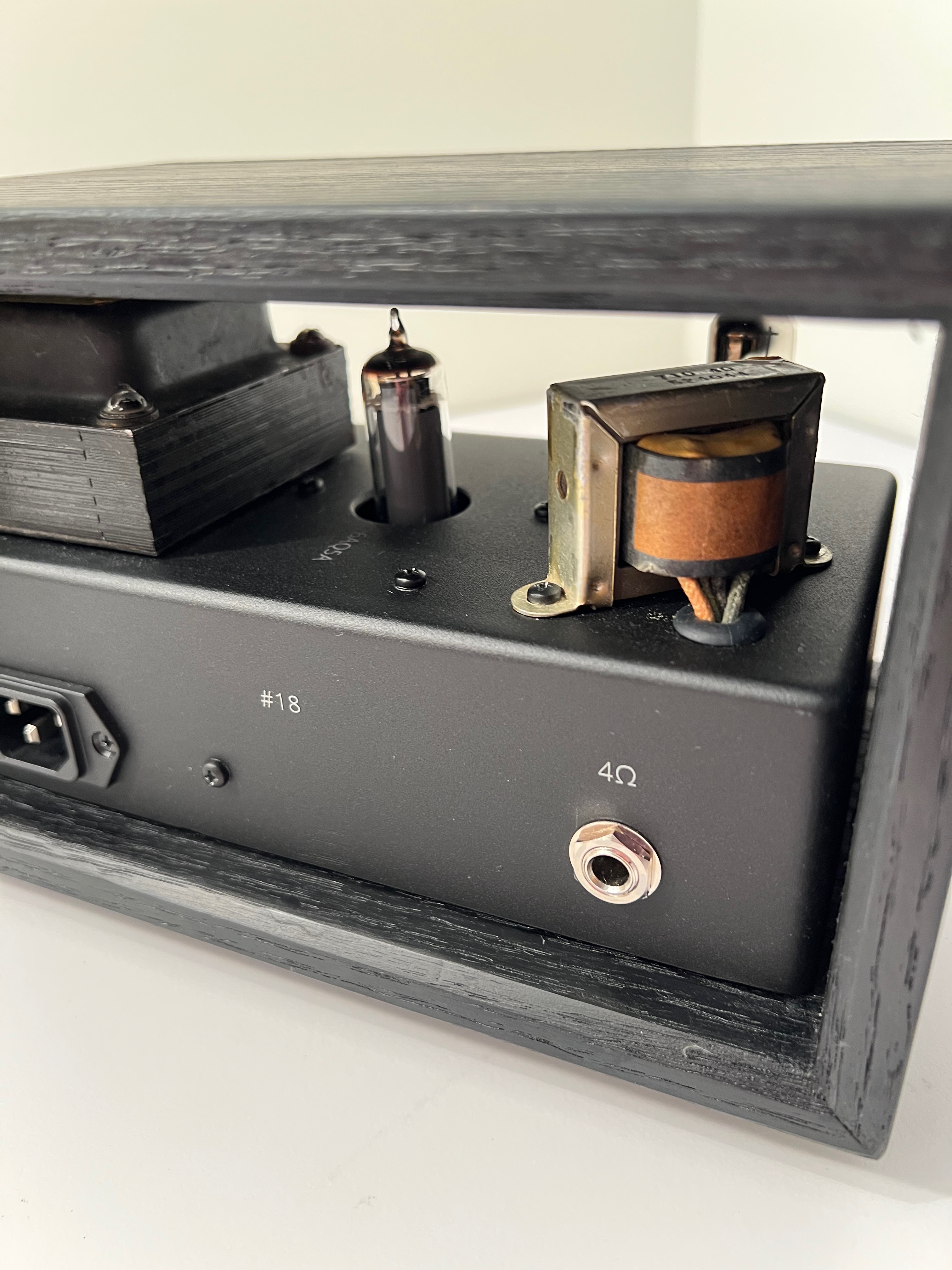
This one is called The Sleeper. I wanted to challenge myself by building an amp around obscure tubes instead of the usual suspects, so I went looking for little bottles that put out more than they have any right to. I landed on a 6J6 in the preamp and a 6AQ5A in the output. They’re small tubes, but they punch well above their size, and the all-black box ended up hiding exactly how much amp is packed inside.
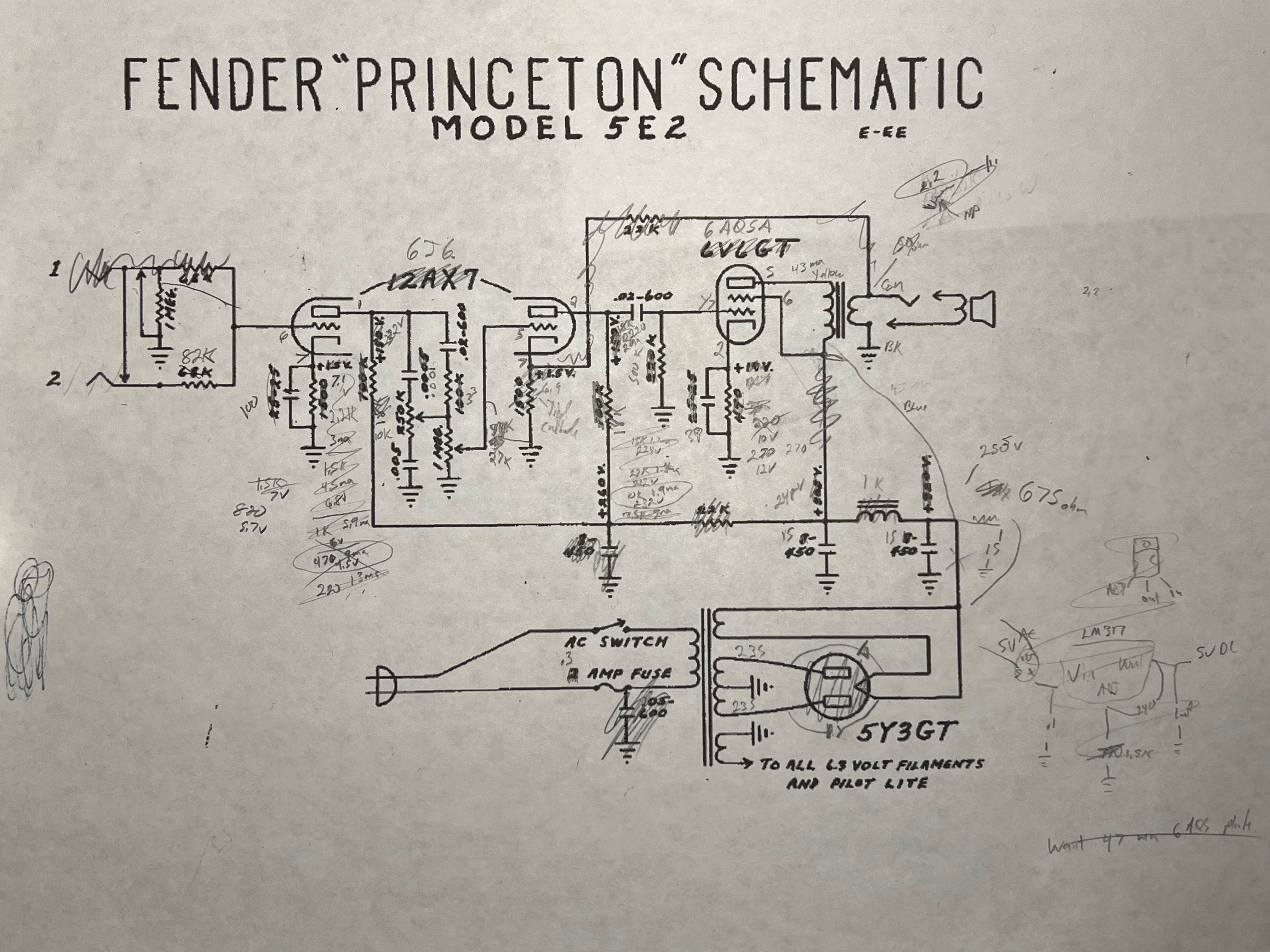
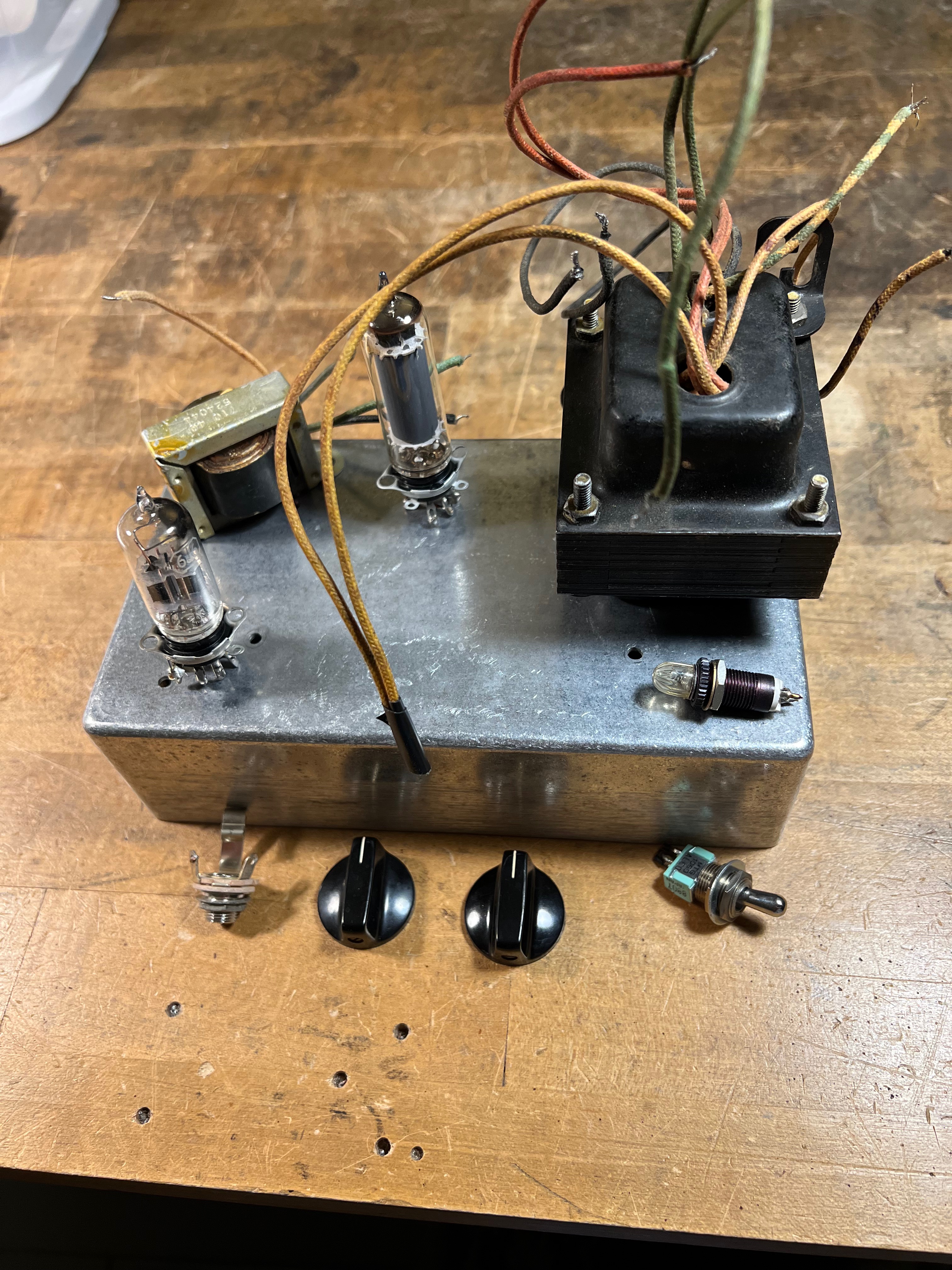
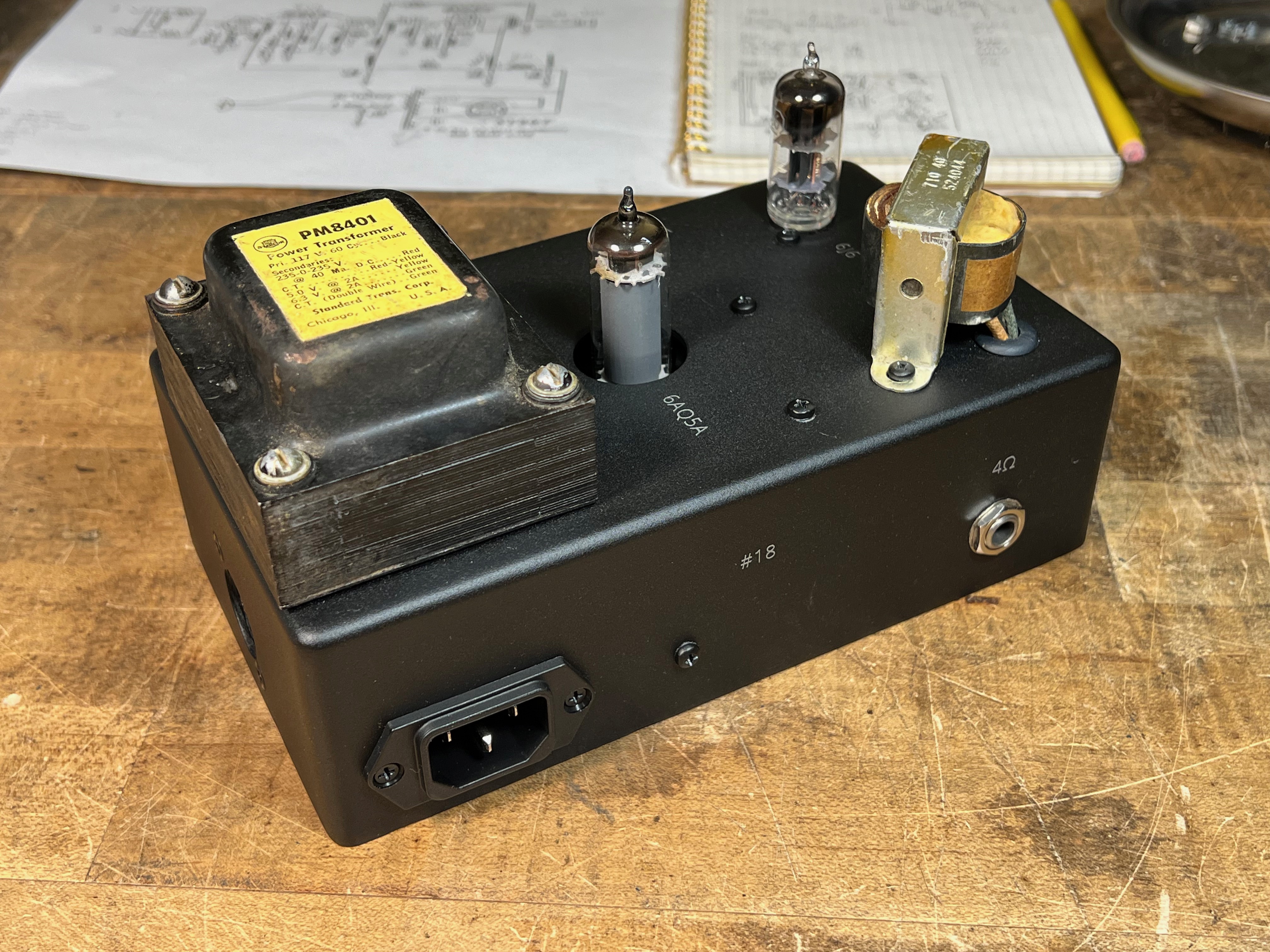
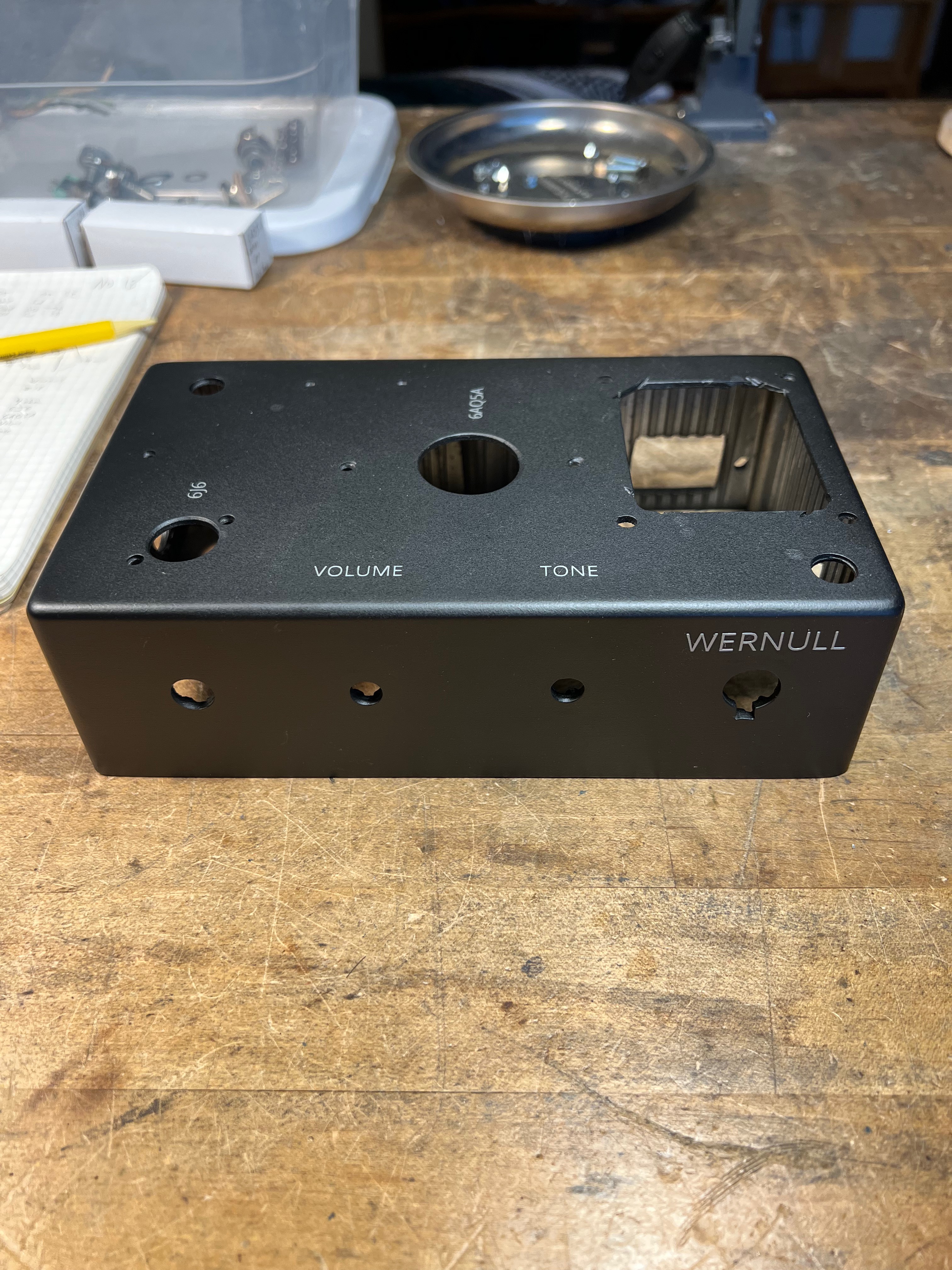
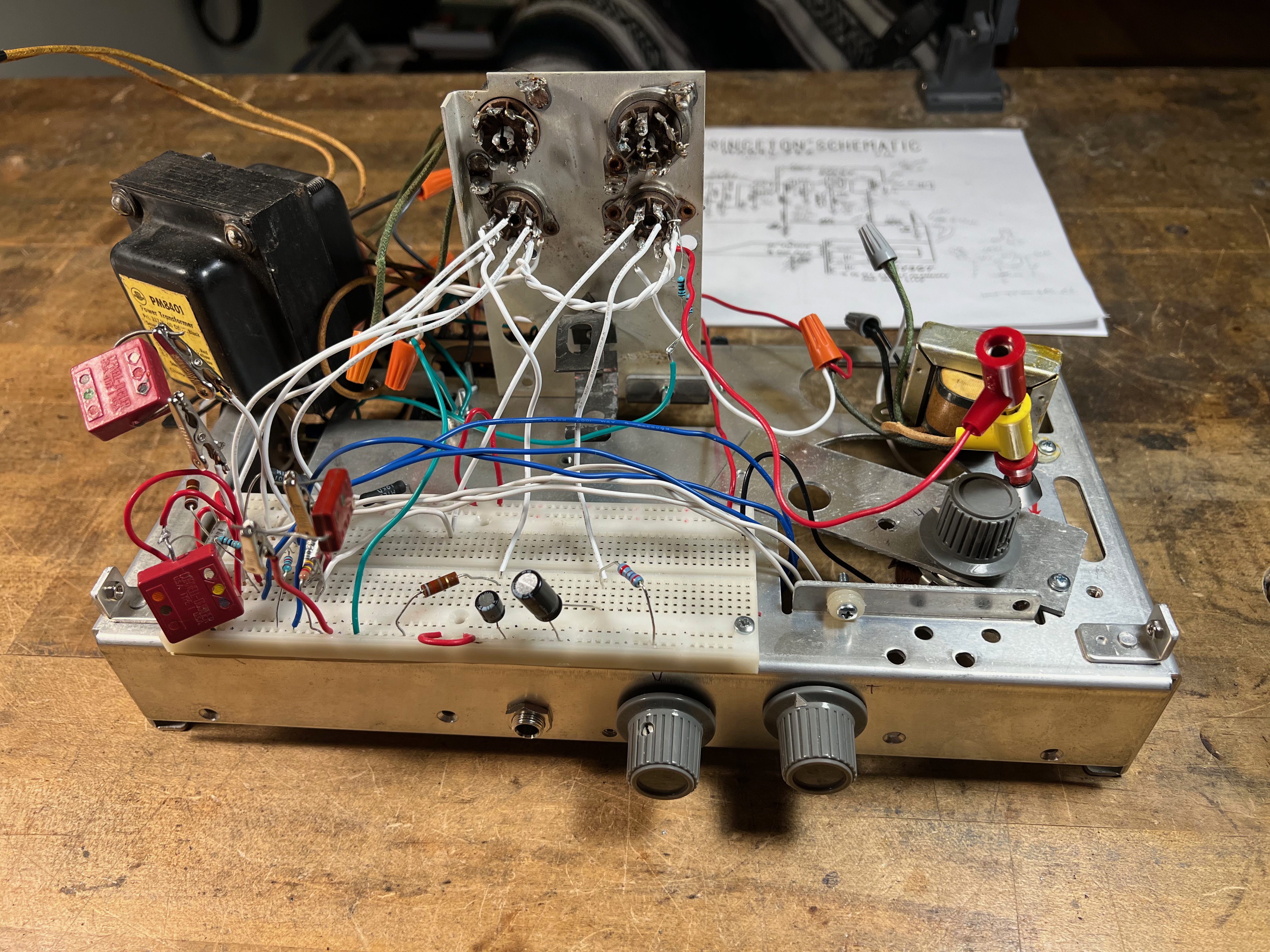
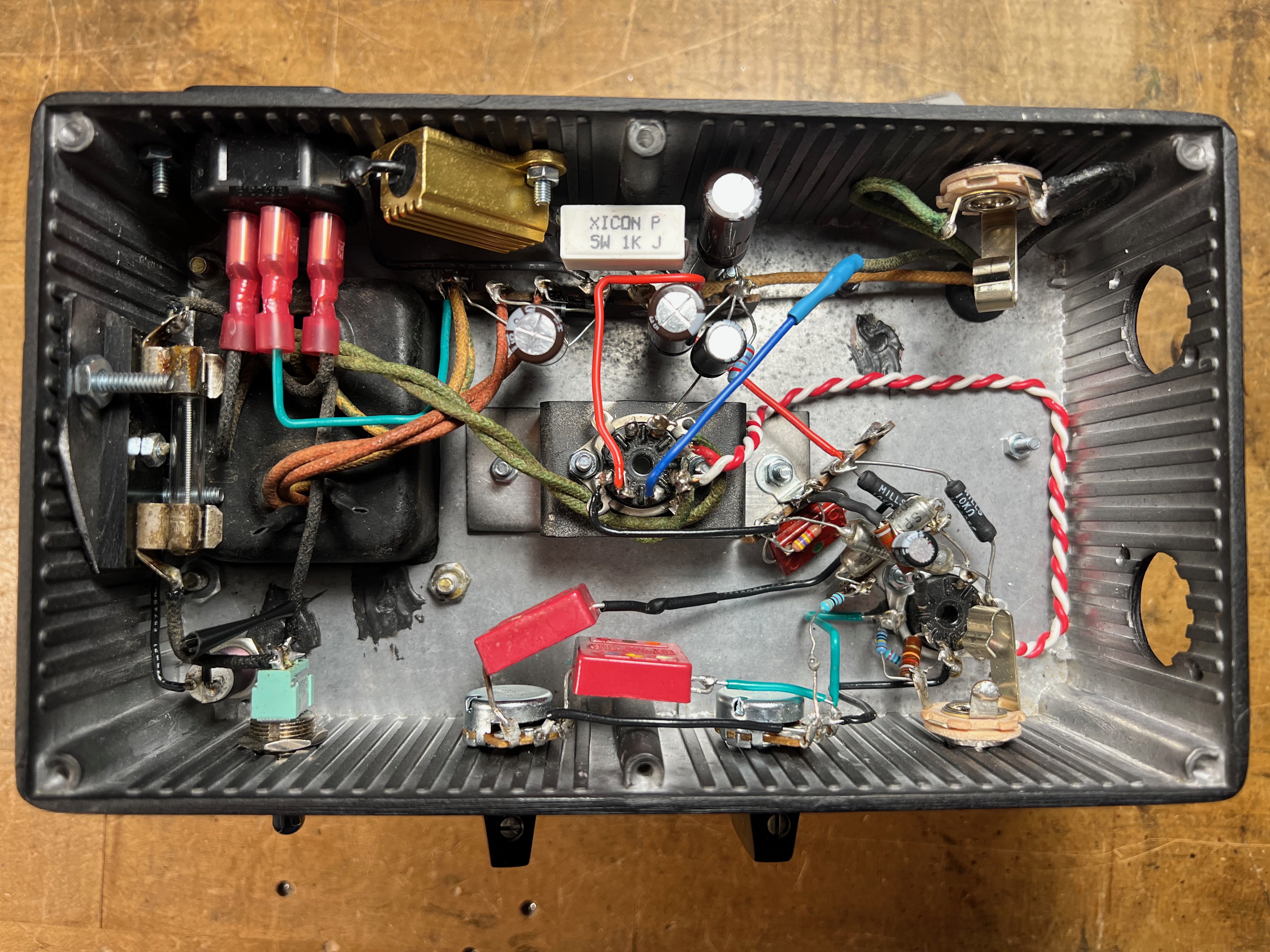
The circuit started life as a Fender 5E2 Princeton, but it got heavily modified to live around the tubes I picked. The 6J6 dual triode handles the preamp, the 6AQ5A does the work in the output stage, and I swapped the tube rectifier for a solid-state one. The controls stayed simple and true to the original with a volume and a tone, plus a 4Ω output around back since this is a head. The little silver mica “domino” caps in the tone circuit are vintage too, which felt right for the era I was chasing.
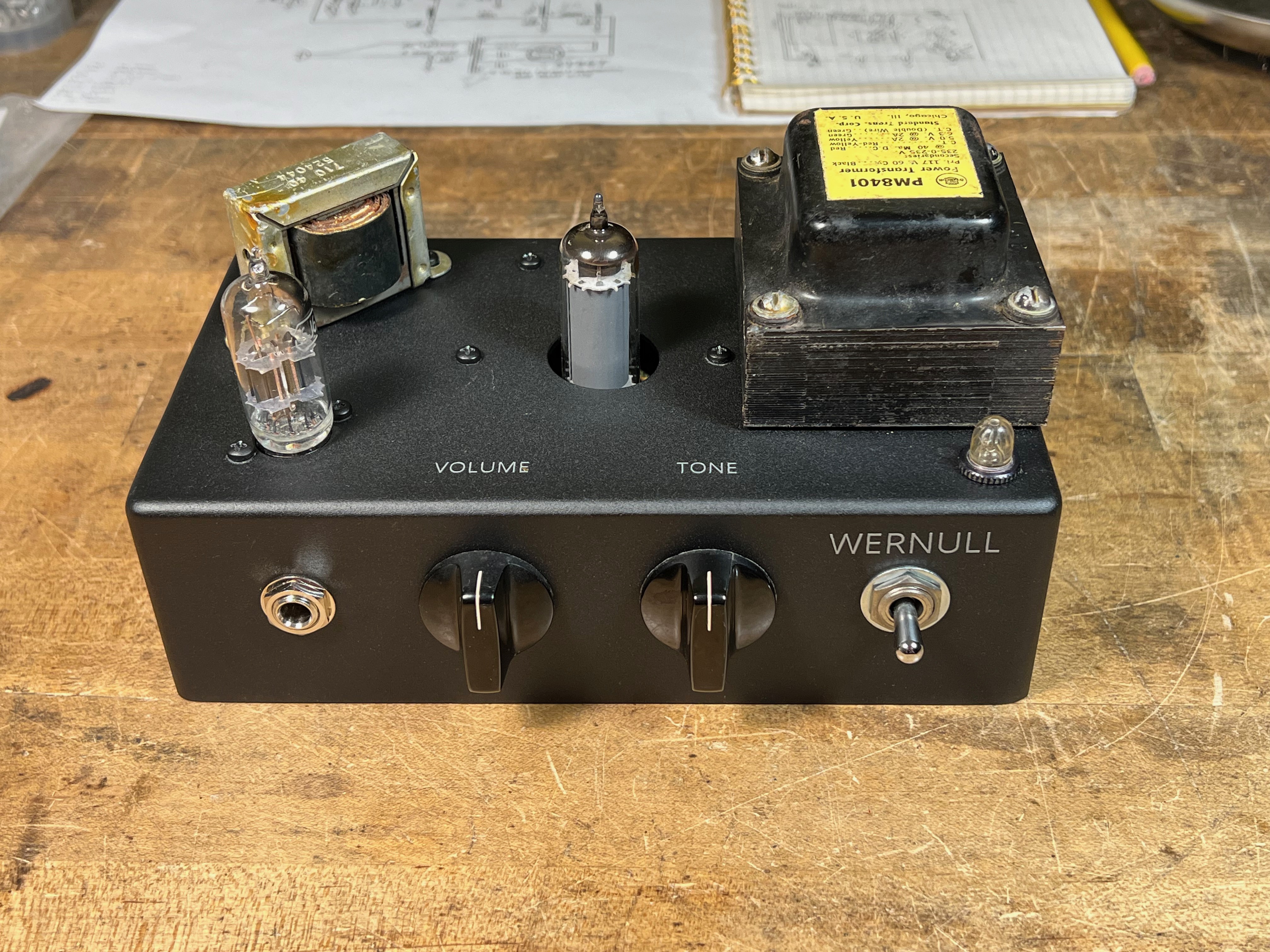
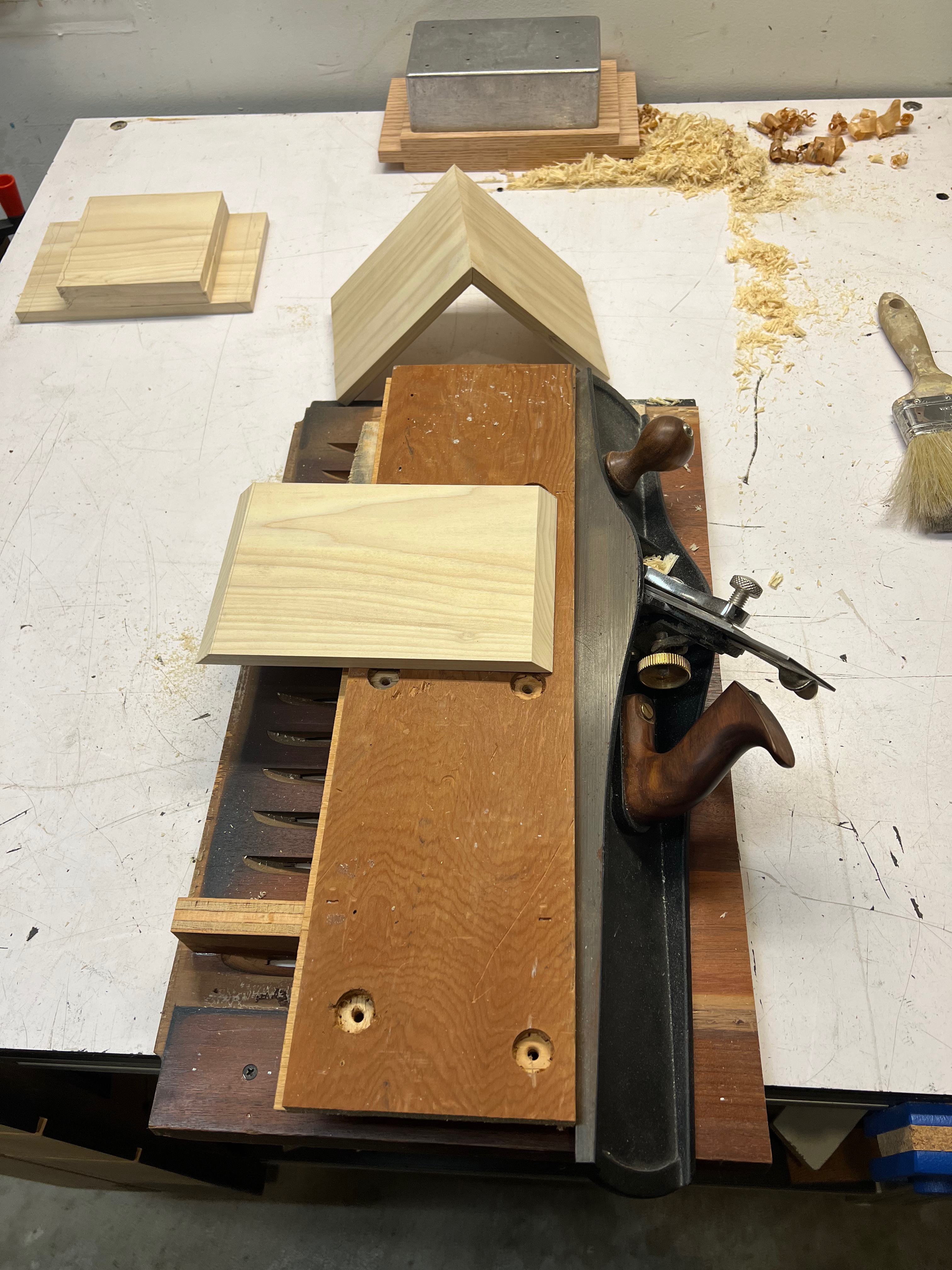
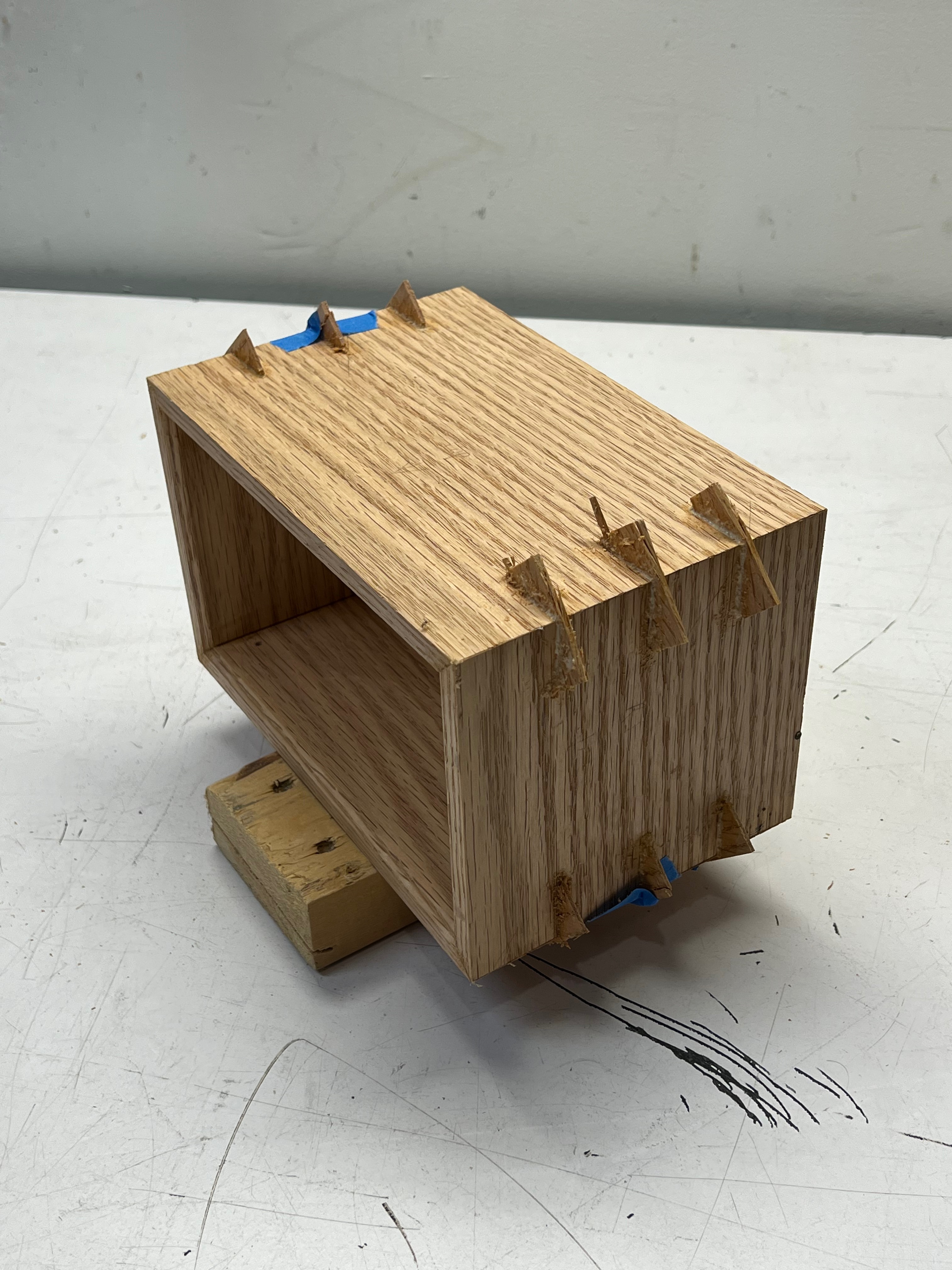
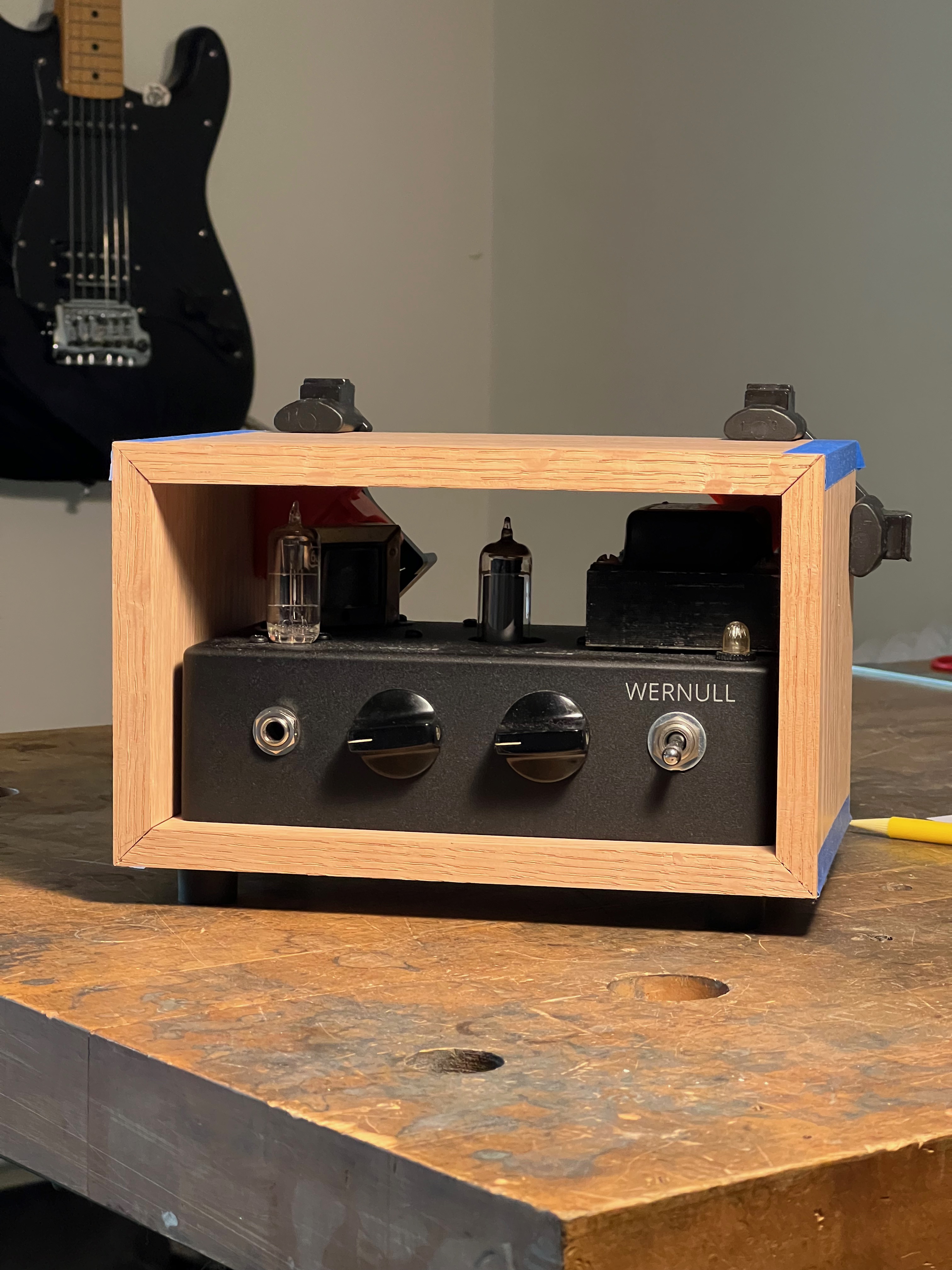
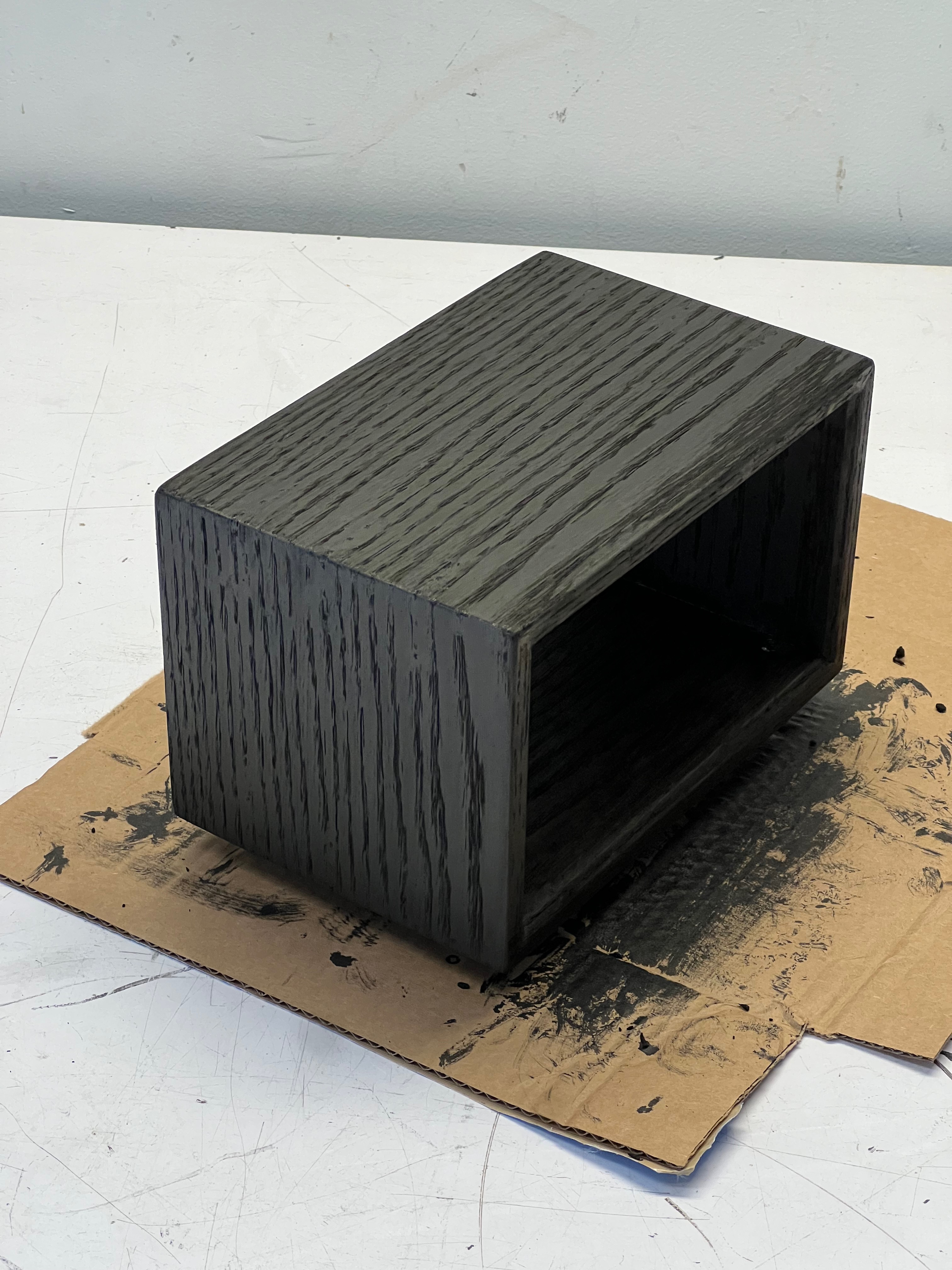
To give the plain oak some drama I dyed it black with Japanese Sumi ink, which soaks into the grain and leaves the texture showing through instead of burying it like paint would. From there it got tung oil and a buff of wax, which warmed the black up and gave it a soft, hand-rubbed sheen.
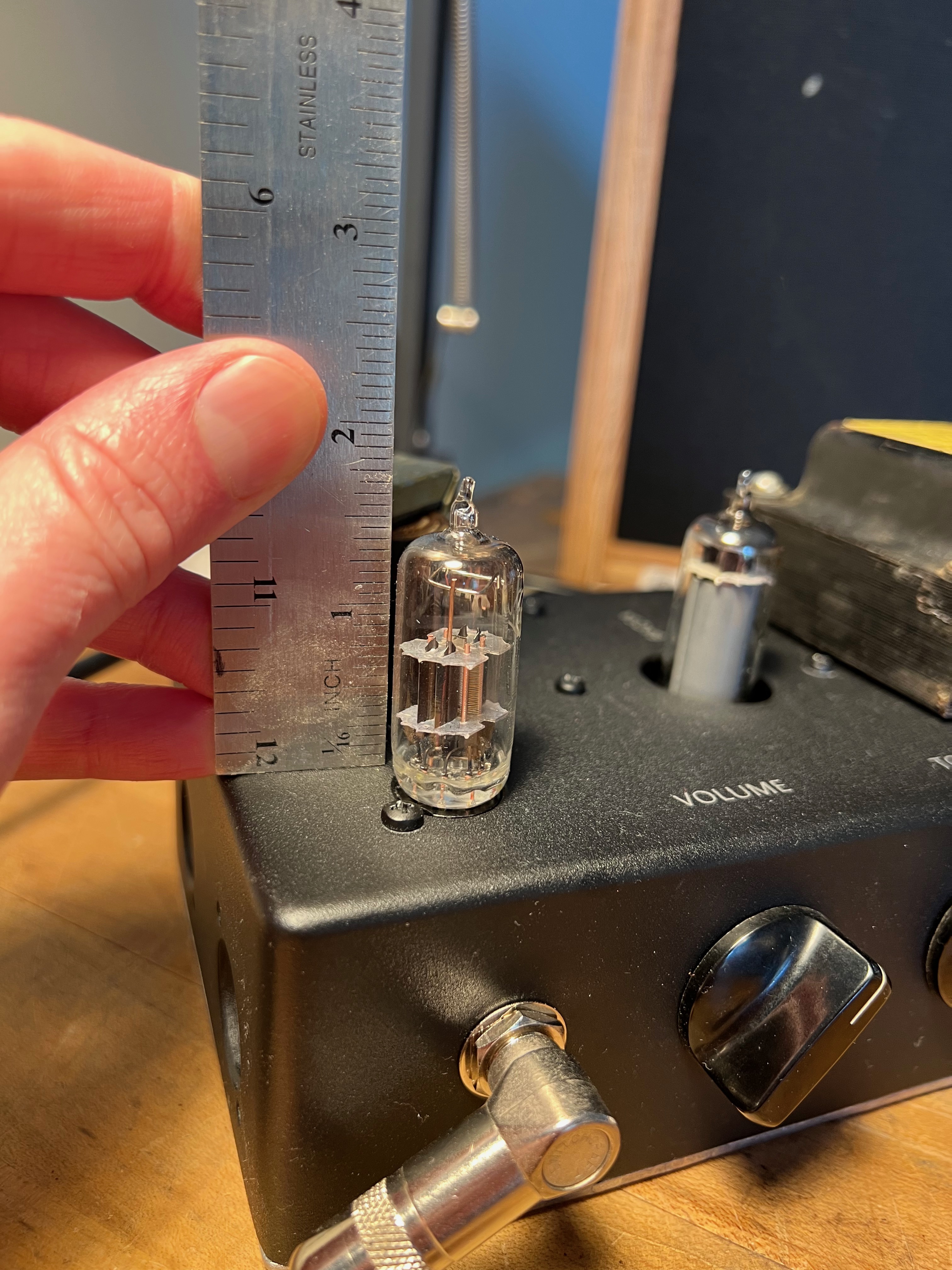
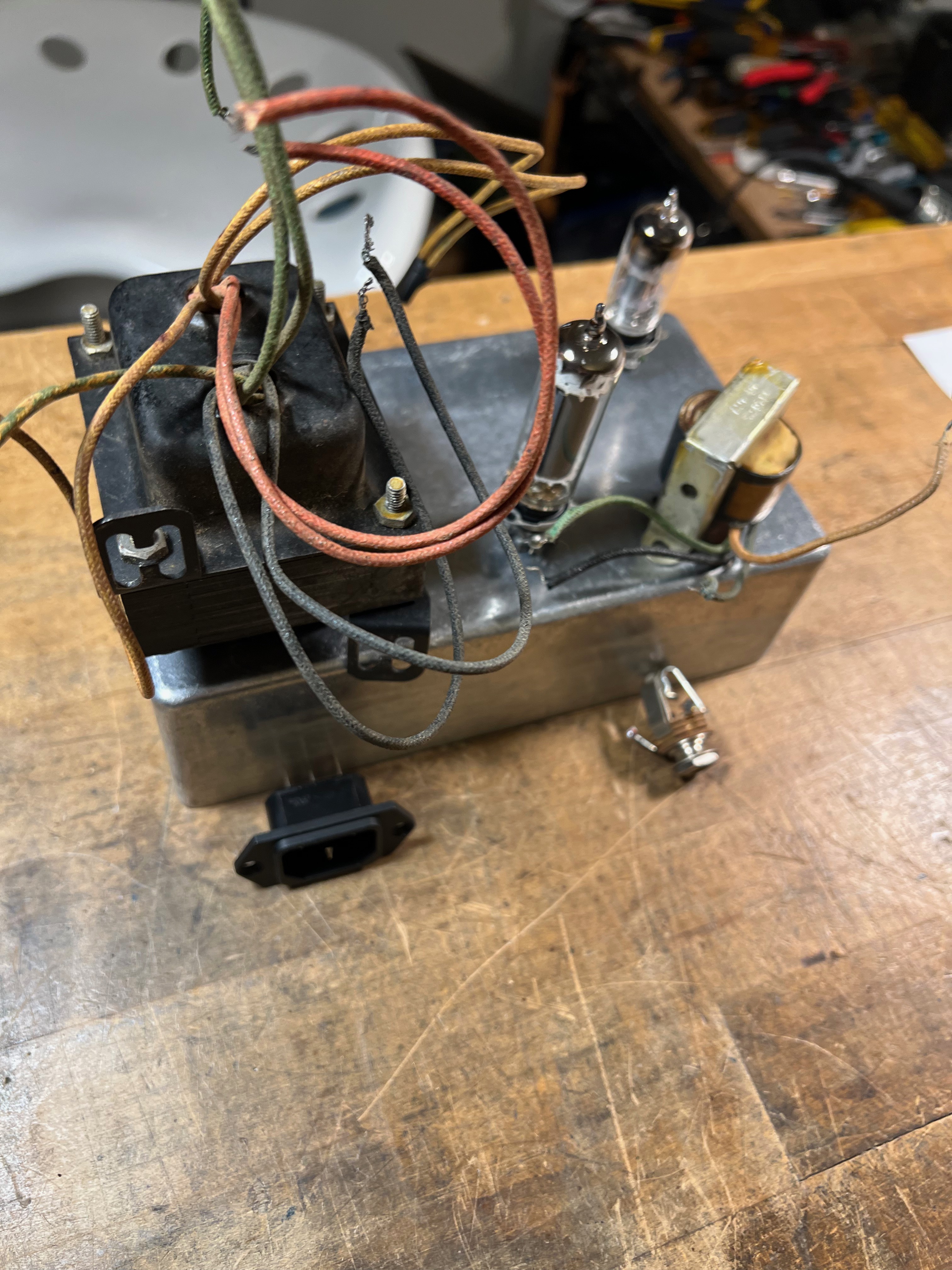
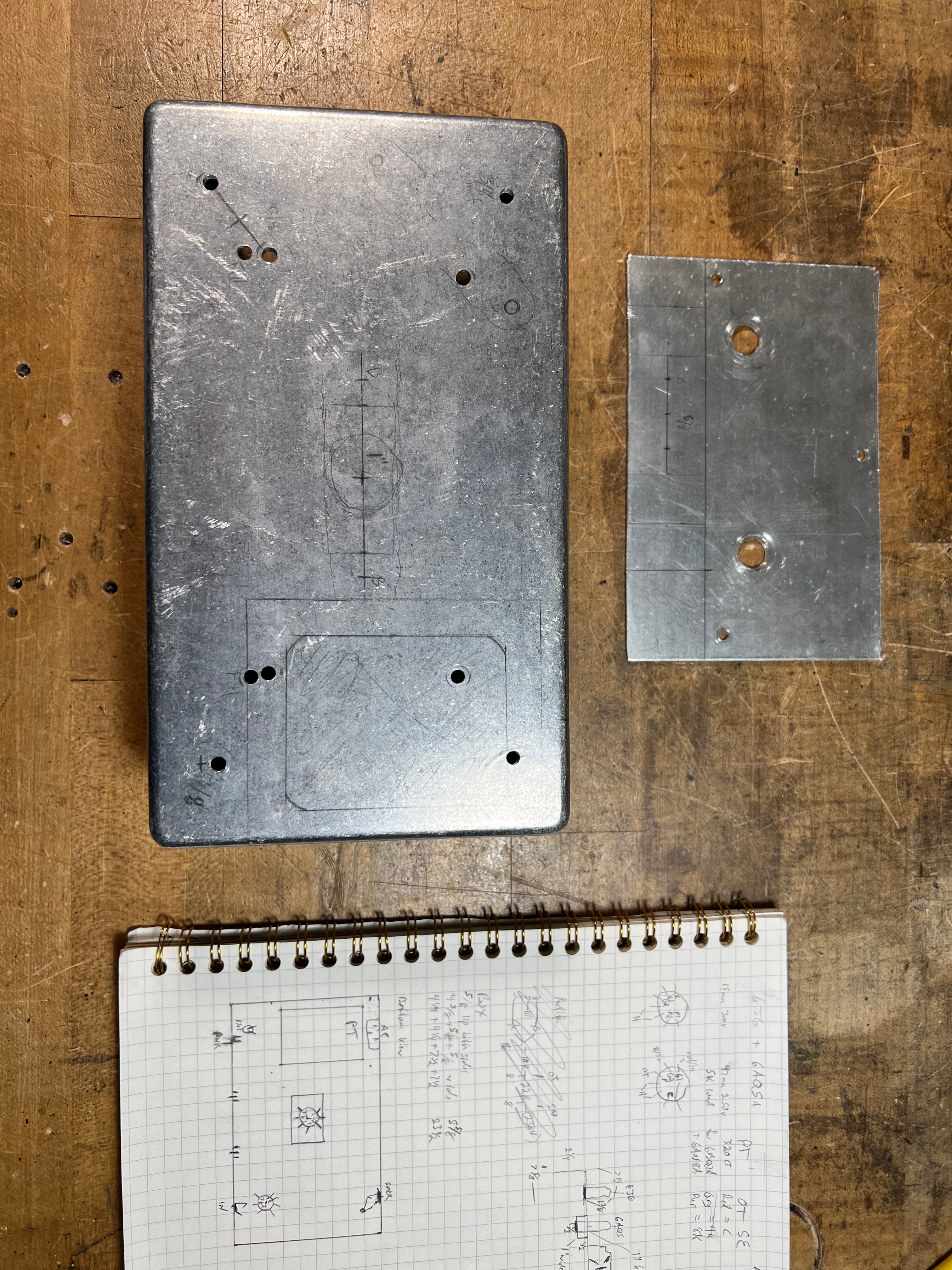
The one mechanical headache was the power tube. The 6AQ5A stood a little taller than I wanted poking out of the chassis, so I made a bracket to drop it down lower into the box and keep the silhouette tidy. With everything that small and packed that tight, I took my time on the wiring to keep it clean inside.
In the end The Sleeper did exactly what I set out to do. It looks like an unassuming little black box, but those two obscure tubes keep it right on the heels of the 6V6 Princeton it grew out of. Sometimes the fun is in the parts nobody reaches for first.